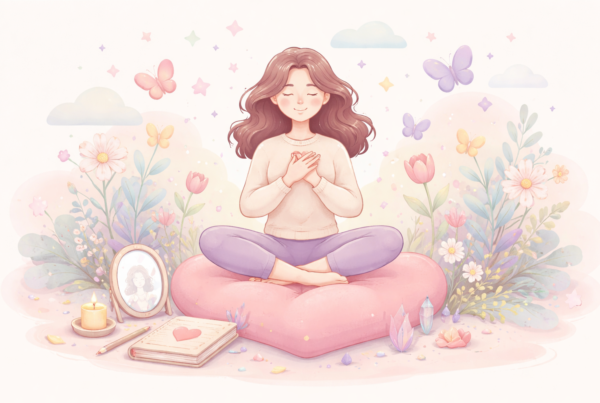
"Boundaries are not the distance we create from others, but the space within which we remain connected to ourselves."
There comes a point in many lives when exhaustion is not caused by effort alone, but by the quiet habit of endlessly extending oneself beyond emotional capacity.
Some people learn, very early, to become accommodating. To soften discomfort.
To make space for others, often without noticing how little space remains for themselves.
And over time, this way of being is praised so consistently that self-abandonment begins to resemble kindness.
Yet emotional generosity without boundaries eventually turns into depletion.
Not suddenly. But gradually, invisibly, over time.
The Misunderstood Nature of Boundaries
Boundaries are often mistaken for distance, resistance or emotional withdrawal.
In truth, healthy boundaries are not acts of rejection. They are acts of recognition.

They allow us to acknowledge:
- What we can hold,
- What we cannot carry,
- And where emotional responsibility truly belongs.
A boundary is not a wall that disconnects us from others. It is a quiet reminder that care must include the self as well.
Why Boundaries Feel Emotionally Difficult
It is more often:
- Will I disappoint someone?
- Will I appear selfish?
- Will I still be loved if I say no?

For many individuals, the discomfort around boundaries is rarely practical. It is emotional.
The fear is seldom:
“I cannot do this.”
And so people continue saying yes long after emotional capacity has been exceeded.
Not because they lack awareness but because they fear the emotional consequences of choosing themselves.
The Difference Between Compassion and Self-Erasure
- There is a profound difference between kindness and self-erasure.
- Compassion allows connection.
Self-erasure demands disappearance. - One emerges from emotional abundance.
The other from fear, conditioning or the longing to remain accepted. - Healthy relationships do not require the constant abandonment of personal needs.
Nor should emotional availability come at the cost of emotional survival.
The Quiet Language of Healthy Boundaries
Boundaries rarely arrive dramatically.
Often, they appear in the smallest moments:
- allowing oneself rest without apology,
- declining what feels emotionally overwhelming,
- no longer overexplaining personal choices,
- recognising when silence is more nourishing than engagement.
They are subtle acts of self-respect.
And perhaps most importantly, boundaries create relationships that are sustainable rather than sacrificial.
What Boundaries Protect
Healthy emotional boundaries protect:
- inner steadiness,
- emotional clarity,
- psychological well-being,
- and the ability to remain present without becoming emotionally consumed.

Without boundaries, empathy can quietly become exhaustion.
With boundaries, care becomes intentional, balanced and enduring.
And so people continue saying yes long after emotional capacity has been exceeded.
Not because they lack awareness but because they fear the emotional consequences of choosing themselves.
A Gentle Pause
You may wish to ask yourself:
- Where in my life am I overextending myself emotionally?
- What am I afraid might happen if I begin choosing differently?
- Do I allow myself the same compassion I so easily offer others?
There is no urgency in these questions.
Only an invitation toward awareness.

Remember, boundaries are not barriers against love.
They are what allow love, care and connection to exist without resentment, depletion or quiet emotional loss.
Because the ability to protect one’s inner world is not selfishness.
It is emotional wisdom.
And sometimes, healing begins the moment we realise that protecting our peace is not an act of distance- but an act of self-respect.